Medical devices are supposed to heal — not harm. When a hip implant fails, a pacemaker malfunctions, or surgical mesh causes devastating complications, patients deserve answers and compensation. Our attorneys have the specialized expertise to take on major medical device manufacturers.
Americans rely on medical devices for everything from joint replacements to cardiac care. The medical device industry generates over $180 billion annually in the United States alone. Unfortunately, the rush to bring new products to market sometimes means that safety takes a back seat to profits.
The FDA's approval process for medical devices has significant gaps. Many devices reach the market through the controversial 510(k) pathway, which allows manufacturers to bypass rigorous clinical testing by claiming their device is "substantially equivalent" to an existing product. This means many devices you receive have never been tested in clinical trials on actual patients.
When these devices fail inside your body, the consequences can be devastating — chronic pain, additional surgeries, infections, organ damage, and in the worst cases, death. Our defective medical products injury attorneys understand the unique complexities of these cases and have the resources to challenge even the largest device manufacturers.
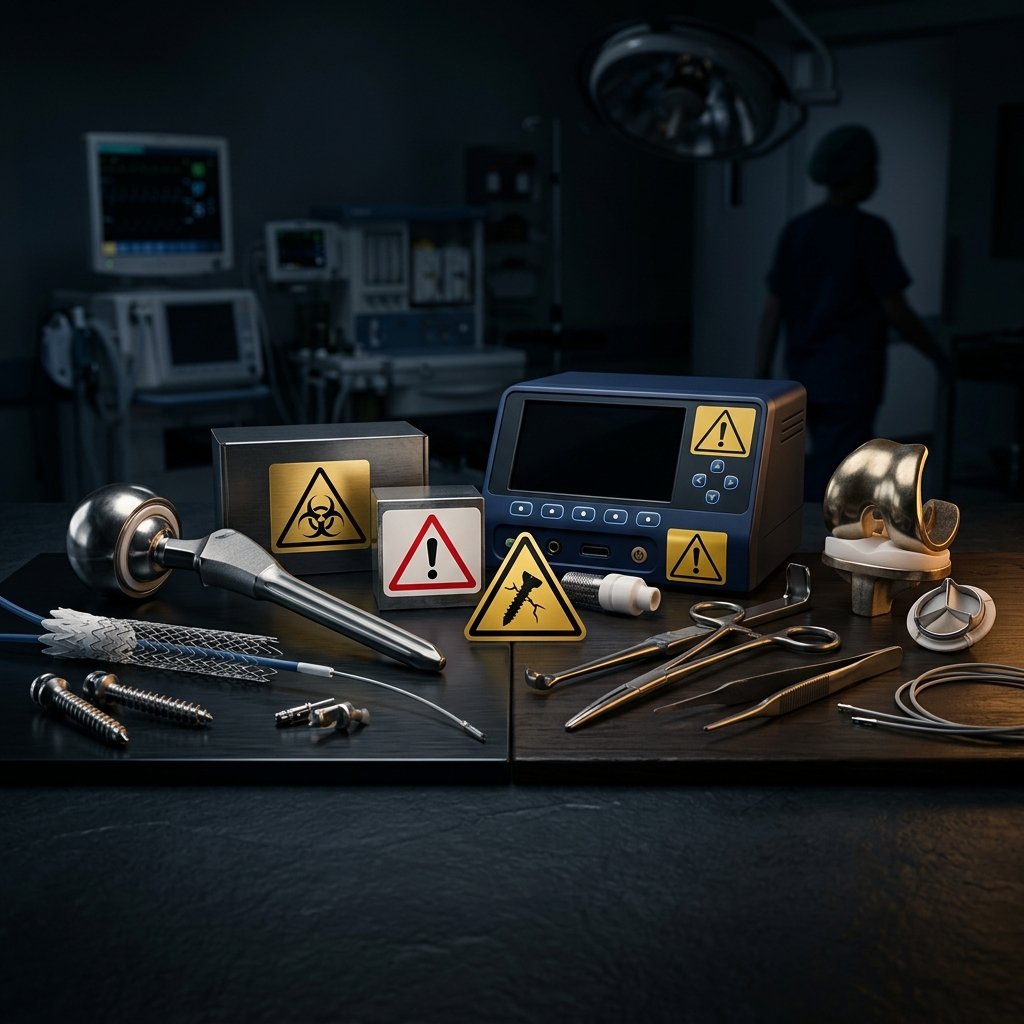
Metal-on-metal hip implants, knee replacement components, and orthopedic hardware that fail prematurely causing metallosis, bone deterioration, and the need for painful revision surgeries.
Hernia mesh and transvaginal mesh products that erode, migrate, or cause chronic infections, organ perforation, and debilitating pain requiring multiple corrective surgeries.
Defective pacemakers, defibrillators, heart valves, and stents that malfunction, leading to cardiac events, electrical failures, and life-threatening complications.
Insulin pumps, infusion systems, and drug delivery devices that deliver incorrect dosages, malfunction, or cause infections at insertion sites.
Defective intraocular lenses, LASIK equipment, and other eye-related medical devices that cause vision loss, chronic dry eye, or permanent eye damage.
Failed dental implants, defective orthodontic hardware, and contaminated dental materials that cause infections, nerve damage, and bone loss.
Not every complication from a medical device indicates a defect, but certain symptoms should prompt you to investigate further:
When the FDA recalls a medical device, it does not provide compensation to patients. A recall simply removes the product from the market. To receive compensation for injuries, you need to file a product liability claim against the manufacturer. Our attorneys monitor all FDA recalls and can quickly determine if your device is affected.